
超遠心機(超遠心分離機)
ベックマン・コールターの超遠心機(超遠心分離機)は、最大1,000,000xg超の遠心力と高い再現性により、ウイルス、ウイルスベクター、細胞外小胞(EV)、タンパク質、核酸(DNA/RNA)などの高純度分離を実現します。
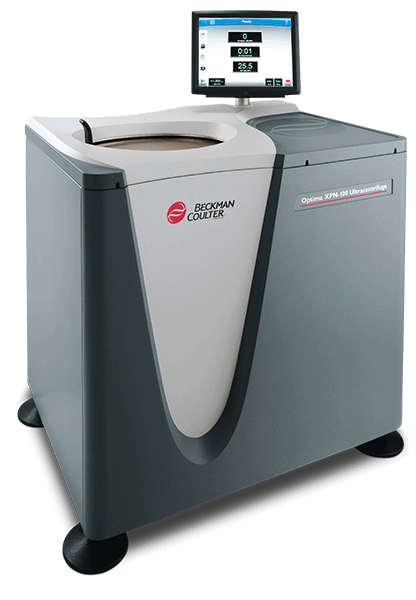
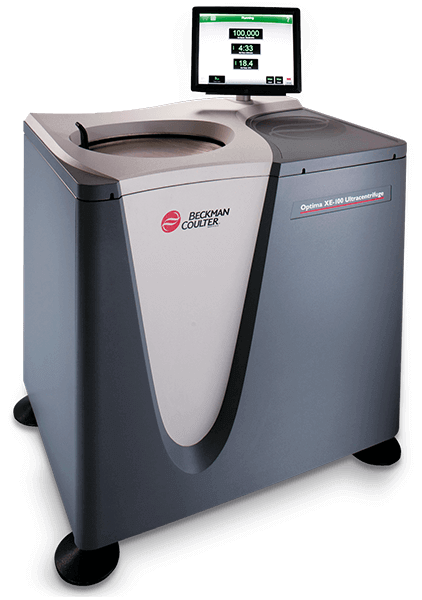
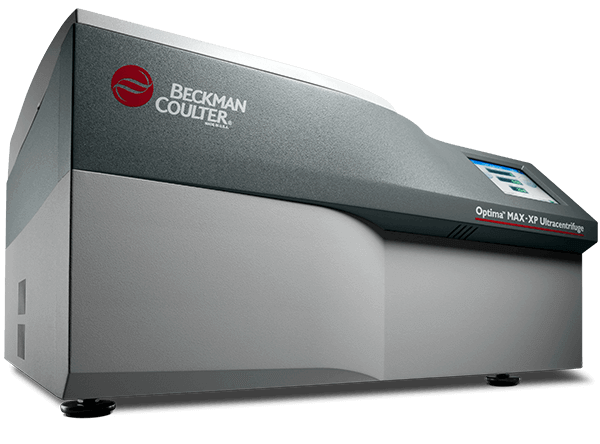
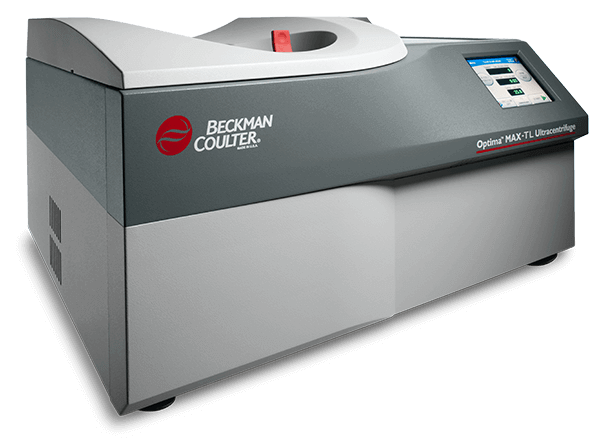
1947年に世界初の超遠心機を商用化して以来、分離技術をリードし続けており、現在はフロア型のOptima XPN / XEシリーズおよび卓上型のOptima MAX-XP / MAX-TLと、用途・処理量に応じた幅広いラインナップを提供しています。
密度勾配遠心法をはじめとする高度な分離アプリケーションに対応し、バイオ医薬品開発、ウイルス・ウイルスベクター精製、EV研究、基礎研究など多様な研究ニーズに対応。さらに、豊富なロータとチューブ・アクセサリ、プレミアムモデルに搭載のリモートモニタリング・遠心シュミレーション・トレーサビリティ機能などにより、高精度かつ効率的なワークフロー構築を支援します。
最適な超遠心機の選定のご相談、アプリケーションに関するご質問など、お気軽にお問い合わせください。


FAQ on Ultracentrifuges
What are the most common applications of ultracentrifugation?
Ultracentrifugation is commonly used in biopharmaceutical research, virology, molecular biology, proteomics, and nanotechnology. Typical applications include viral vector purification, extracellular vesicle isolation, density gradient centrifugation, protein analysis, and nanoparticle characterization.
How fast does an ultracentrifuge spin?
Depending on the system and rotor configuration, ultracentrifuges can operate at speeds exceeding 100,000 RPM and generate centrifugal forces greater than 800,000 × g. These conditions allow researchers to separate microscopic particles with exceptional precision and reproducibility.
What is an ultracentrifuge?
An ultracentrifuge is a laboratory instrument that spins samples at extremely high speeds, often exceeding 100,000 RPM, to generate powerful centrifugal forces. These forces enable the separation of subcellular particles, viruses, proteins, nucleic acids, extracellular vesicles, and nanoparticles that cannot be effectively isolated using conventional centrifuges.
What is the difference between a centrifuge and an ultracentrifuge?
The primary difference is speed and centrifugal force. Standard laboratory centrifuges are used for routine sample preparation, while ultracentrifuges achieve significantly higher rotational speeds and relative centrifugal forces (RCF). This makes ultracentrifuges suitable for separating very small particles such as viruses, ribosomes, proteins, and lipoproteins.
