
Automated Cell Culture and Clone Screening Systems
Automated cell culture and clone screening systems help optimize cell line development, monoclonal antibody development, and high-throughput screening workflows by reducing manual handling and improving process consistency. For laboratories developing therapeutic antibodies, biologics, and other cell-based products, automation can help accelerate clone selection while supporting more reproducible results.
By combining automated cell culture, process monitoring, imaging, feeding, sampling, and screening capabilities, these platforms help laboratories manage larger numbers of minipools and clones with greater efficiency. Automated workflows can reduce repetitive manual tasks, improve standardization, and support the identification of promising candidates during early development and screening processes.
Common Applications for Automated Cell Culture and Clone Screening Systems
- Cell line development
- High-throughput clone screening
- Automated sampling, feeding, imaging, and online monitoring of cultivation parameters
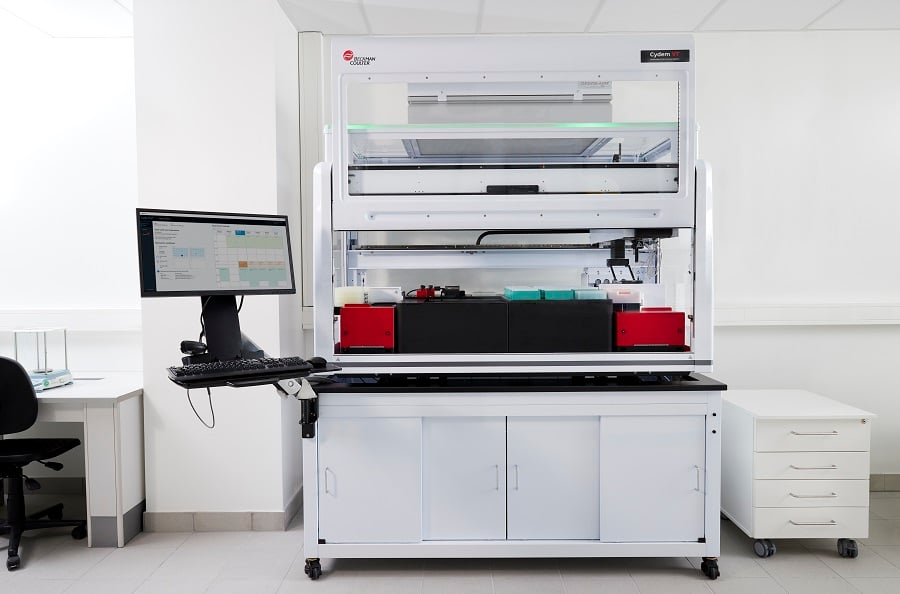
Product not for use in diagnostic or therapeutic procedures.
FAQ on Automated Cell Culture and Clone Screening Systems
What is clone selection in cell line development?
Clone selection is the process of identifying cell clones with desirable characteristics such as productivity, growth performance, stability, or product quality. It is a critical step in cell line development because the selected clone can directly influence downstream manufacturing performance.
What workflows can automated cell culture and clone screening systems support?
Automated cell culture and clone screening systems can support microbial and mammalian cell culture workflows, cell line development, clone screening, and selection, monoclonal antibody development, media optimization, and high-throughput screening programs.
What is an automated cell culture and clone screening system?
An automated cell culture and clone screening system is an integrated laboratory platform that helps manage cell culture and clone evaluation activities through automated sampling, feeding, media exchange, process monitoring, imaging, and data collection. These systems support more standardized and scalable cell line development workflows.
How does automation support cell line development?
Automation supports cell line development by enabling researchers to evaluate larger numbers of pools and clones while reducing manual intervention. Automated workflows help accelerate candidate identification, improve workflow consistency, and support data-driven decision-making throughout development programs.
What are the benefits of automated cell culture?
Automated cell culture can help reduce hands-on time, improve reproducibility, minimize variability between operators, and increase laboratory throughput. These benefits can be especially valuable for organizations managing large-scale screening and development programs.
